Alcohol & Drug Self-Paced Early Recovery Skills (Stage 3) 2 Sections19 Lessons10 Weeks
ERS 1A Triggers
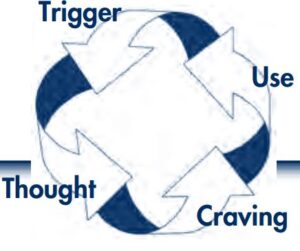
Triggers are people, places, objects, feelings, and times that cause cravings. For example, if every Friday night someone cashes a paycheck, goes out with friends, and uses stimulants, the triggers might be
● Friday night
● After work
● Money
● Friends who use
● A bar or club
Your brain associates the triggers with substance use. As a result of constant triggering and using, one trigger can cause you to move toward substance use. The trigger–thought–craving–use cycle feels overwhelming.
Stopping the craving process is an important part of treatment. The best way to do that is to do the following:
1. Identify triggers.
2. Prevent exposure to triggers whenever possible (for example, do not handle large amounts of cash).
3. Cope with triggers differently than in the past (for example, schedule exercise and a 12-Step or mutual-help meeting for Friday nights).
Remember, triggers affect your brain and cause cravings even though you have decided to stop substance use. Your intentions to stop must translate into behavior changes, which keep you away from possible triggers.
What are some of the strongest triggers for you?
__________________________________________________________
What particular triggers might be a problem in the near future?
__________________________________________________________