Alcohol & Drug Self-Paced Relapse Prevention Course (Stage 4) 3 Sections37 Lessons12 Weeks
RP 18 Emotional Triggers
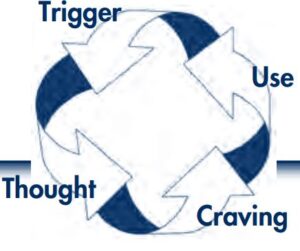
For many people certain emotional states are directly connected to substance use, almost as if the emotion causes the substance use. It seems to people in recovery that if they could avoid ever feeling those emotions (for example, loneliness, anger, feeling deprived), they would never relapse. These emotional triggers should act as warnings or “red flags” for clients.
The most common negative emotional triggers are the following:
Loneliness: It is difficult to give up friends and activities that are part of a substanceusing lifestyle. Being separated from friends and family leaves people feeling lonely. Often friends and family members who do not use are not ready to risk getting back into a relationship that didn’t work earlier. The person in recovery is stranded between groups of friends. The feeling of loneliness can drive the person back toward using.
Anger: The intense irritability experienced in the early stages of recovery can result in floods of anger that act as instant triggers. A person in that frame of mind is only a few steps from substance use. Once a person uses, it can be a long trip back to a rational state of mind.
Feeling Deprived: Maintaining abstinence is a real accomplishment. Usually people in recovery feel justifiably good and proud about what they have been able to achieve. Sometimes people in recovery feel as if they have to give up good times and good things. Recovery seems like a jail sentence, something to be endured. This reverses the actual state of recovery: substance use begins to look good and recovery seems bad. This upside-down situation quickly leads to relapse.
It is important to be aware of these red flag emotions. Allowing yourself to be flooded with these powerful negative emotions is allowing yourself to be swept rapidly toward relapse. Have some of these emotional states been a trigger for you in the past? Which ones?
______________________________________________
Are there other negative emotional states that are dangerous for you? What are they?
_____________________________________________________
One of the goals during the recovery process is learning to separate thoughts, behaviors, and emotions so that you can control what you think and how you behave. It is important to recognize and understand your emotions so that your actions are not always dictated by your feelings.
Many people find that writing about their feelings is a good way to recognize and understand their emotions. You don’t need to be a good writer to use this tool. People who do not like to write and who have never written much in the past still can learn valuable things about themselves by putting their feelings into words. Follow the simple instructions, and try a new way of getting to know yourself:
1. Find a private, comfortable, quiet place and a time just for writing. Try to write each day, even if you can write only for a few minutes.
2. Begin by taking several deep breaths and relaxing.
3. Write in a response to a question that you have asked yourself about your feelings (for example, “What am I feeling right now?” “Why am I angry?” “Why am I sad?”).
4. Forget spelling and punctuation; just let the words flow.
Writing about your feelings makes them clearer to you. It also can help you avoid the emotional buildup that often leads to relapse.